Afghanistan, once a thriving nation, is now notorious for all the wrong reasons. These days, we hear nothing but war, terrorism, poverty and more. The new regime imposed by the Taliban certainly does nothing to help a country already on its knees, and information, both coming in and going out, is rationed and rigorously screened. But that’s not the whole story.
Despite their suffering, they are the most resilient people I have ever had the chance to meet, guardians of a millennia-old culture and capable of facing life day by day with uncommon tenacity, always willing to share a story with a stranger over a cup of tea.
I decided to travel across the country to understand and move beyond stereotypes and clichés we’ve been bombarded with by the media in recent years. What I found filled me with wonder; a true Garden of Eden, where marvels and snakes are a daily occurrence.
Summarizing a journey like this in just a few images wasn’t easy, but I hope I’ve done it justice, at least a little.
Thanks to NOVE Caring Humans for the support while in Kabul.
Check the website, they're doing their best.


Bamyan, in northern Afghanistan, is a cold region and, like most of the country, largely desert. Once famous for its Buddha statues, they were destroyed by the Taliban themselves in 2001 as an act of retaliation against the West. Today, having repented of that act, they are trying to restore the sites, but unfortunately, all that remains are large holes.
The predominant ethnic group in the region is the Hazara, who are of Mongolian origin. Hospitable and open-minded people, the Hazara are unfortunately systematically persecuted, particularly by the country’s largest and most numerous ethnic group, the Pashtuns, to whom most Taliban members belong.
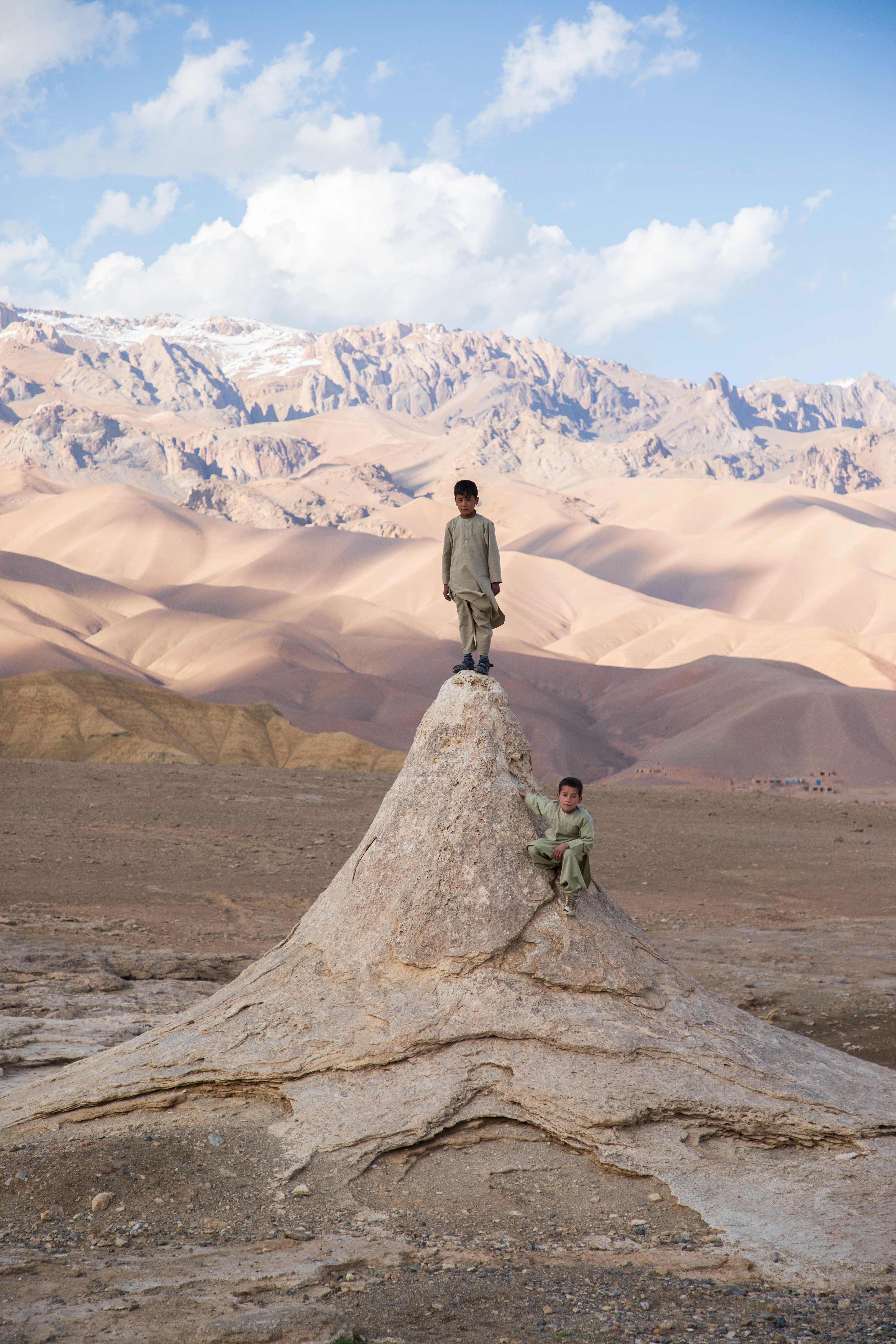
Boys playing around in the Dragon Valley.
The Dragon Valley takes its name from a famous legend.
According to the myth, a huge dragon was slain in that area by Ali, the Prophet’s cousin, and the beast still lies dormant within the valley.
The rock formation that the children climbed is said to be one of the dragon’s vertebrae.
According to the myth, a huge dragon was slain in that area by Ali, the Prophet’s cousin, and the beast still lies dormant within the valley.
The rock formation that the children climbed is said to be one of the dragon’s vertebrae.

Two Taliban I’ve met in the Dragon Valley, told me their names meant “gift from Allah” and “fighter”.


The Band-e-Amir Lakes are a true feast for the eyes, so beautiful they look as if someone had painted them. Once a tourist and recreational destination for many Afghans, Taliban restrictions now prevent many people from visiting. Afghan women are completely barred from entering the lake complex, so many families simply no longer go there.
Now look like a ghost town.

Results of an iconoclastic regime.
The outcome of this aversion to images of faces is the ban on movie theaters, theaters, exhibitions, and many other forms of media that we take for granted. Even music is banned in public places.

Ironically, many Talebans like to be portrayed in pictures.
For the Taliban, carrying a weapon is not just a matter of security; in the Quran, the Prophet states that every man should carry a sword. However, swords are impractical today and unsuitable for modern combat, hence the AK-47s.

War seen through the eyes of a kid.

He had a small, old television at home, which he shared with his family. He liked movies with car chases and explosions.
He wished to have a real kite to play with.


Floods are quite common in rural areas, especially during the rainy seasons. Heavy rains falling on the Hindu Kush rush downstream like tsunamis, sweeping away roads and villages. The lack of solid infrastructure and the distance from major population centers limit rescue efforts. Most reconstruction efforts are left to the civilians themselves, who build makeshift structures that are usually swept away by the next flood.
Best case scenario roads gets damaged, worst case scenario villages gets erased.

Not uncommon to see children playing around in the middle of nowhere.
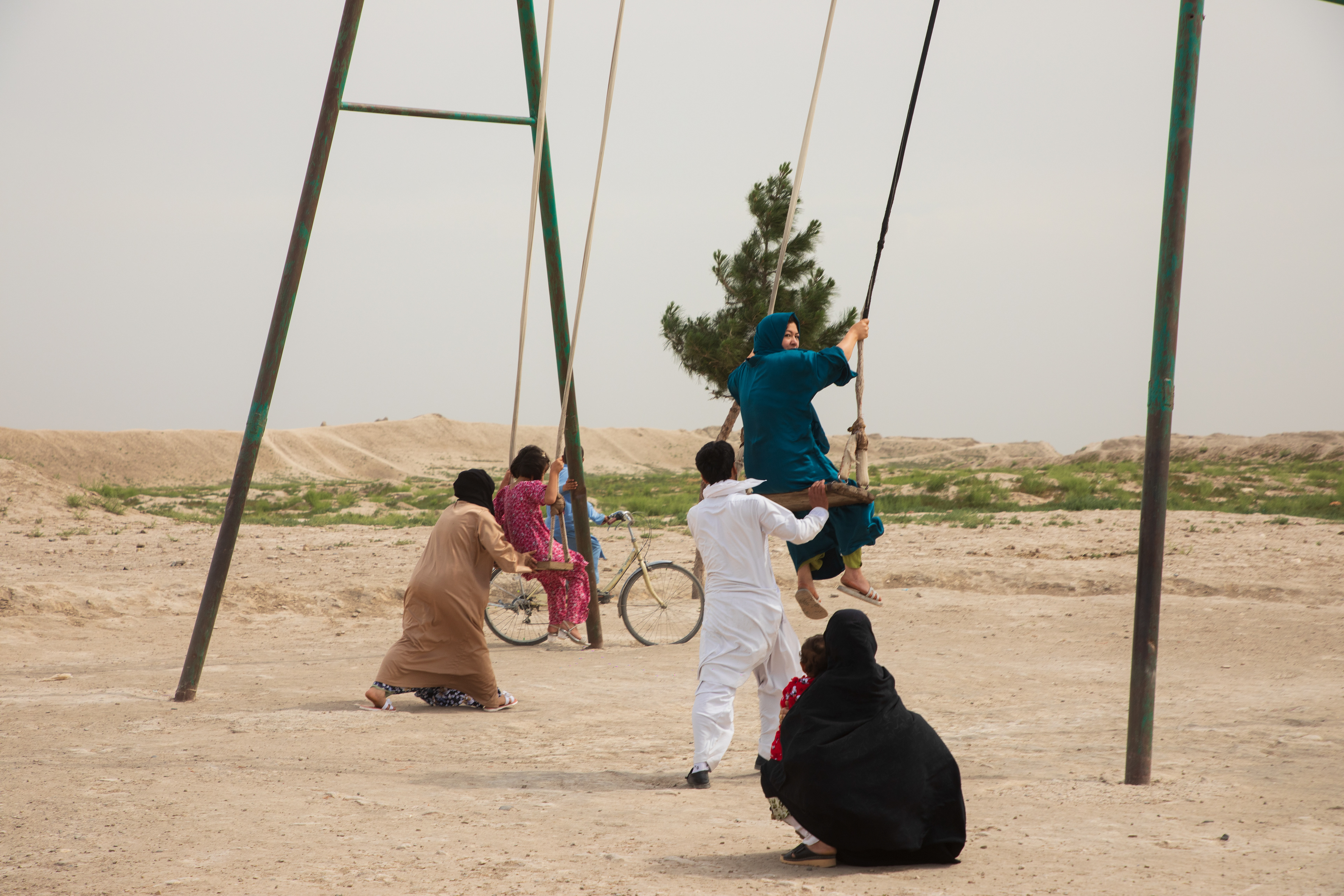
Biggest swing I've ever seen, in the middle of the desert near the ancient walls, outside Herat, built by Alexander the Great.

Horses, mules and carts are still common modes of transportation, especially in rural areas.

Madrasa’s where lots of boys spend their time, memorising the words of the Prophet.

Many photos were here


The names of the deceased warriors are all over the external walls
The Jihad Museum in Herat. The Taliban have, of course, made all the necessary changes, bringing it into line with their religious precepts.
The faces have been removed from the mannequins, the mannequins of women in traditional dress have been removed, and the photos of the mujahideen during the war against the Soviet Union have been removed. The corridors, once filled with relics, now appear half-empty.
Naturally, Afghan women are barred from entering.


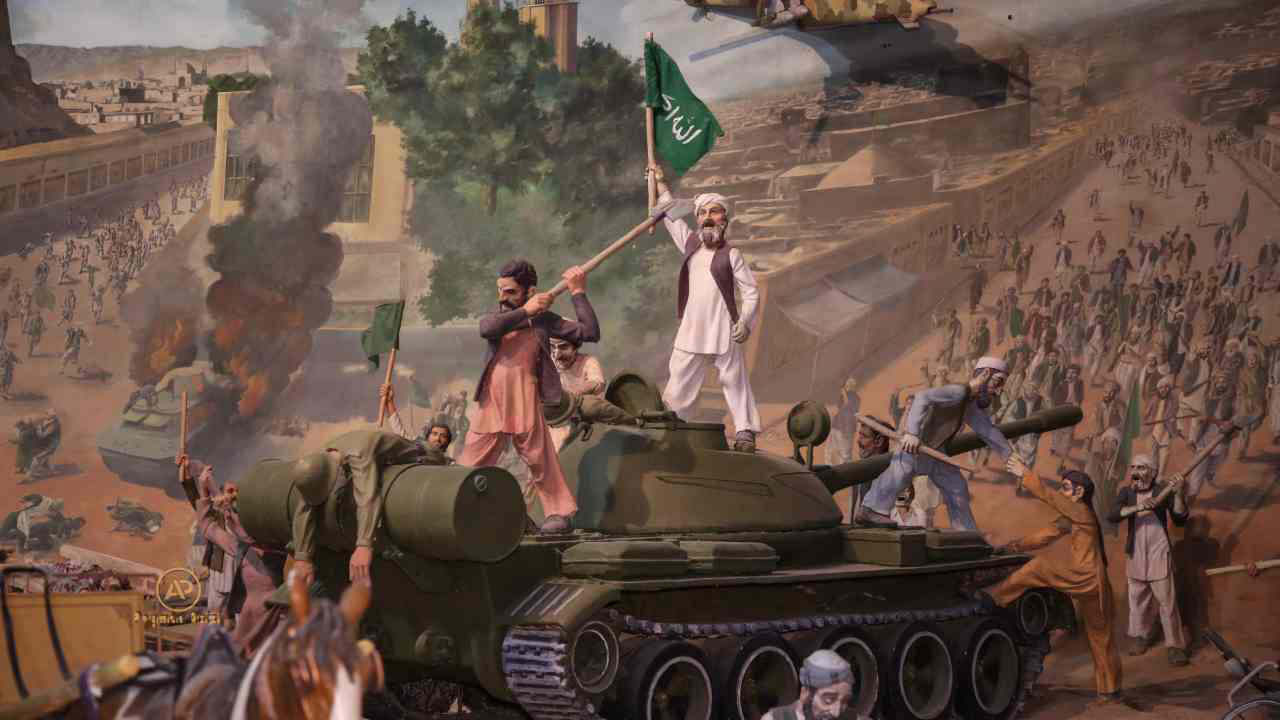
Here's what the museum looked like before the Taliban arrived.

Roughly 90% of the Afghan population is below the poverty line, lots of them lives their lives day by day, helping each others.


These women collaborate with Nove Caring's “Bread for Women” program. They cook bread for 40 families every day.
Without them, many people in their neighborhood in Kabul would struggle to find food.


Physical and mental disabilities are common in Afghanistan; years of war and deeply rooted social customs, such as marriages between close relatives, have led to these consequences.
The young man in the photos above is mentally unstable, which is why he is often kept chained up, as he poses a danger to himself and others.


Aḥmad Shāh Masʿūd, more commonly known as Massoud, the Lion of Panjshir, was of Tajik ethnicity and served as a mujahideen general.
He fought against the Soviets and the Taliban and was killed in an al-Qaeda suicide bombing just two days before the attack on the Twin Towers.
He fought against the Soviets and the Taliban and was killed in an al-Qaeda suicide bombing just two days before the attack on the Twin Towers.
These photos show what his grave looks like today.
Massoud’s tomb, once a cultural hub featuring photographic exhibits of the war, a theater, a library and a park, is now a relic that has been partially destroyed by the Taliban, who harbor clear animosity toward him.
These photos nearly cost me my camera, as it was confiscated from me on the spot. Got it back then.


Tanks and relics from past wars are still a common sight. They can be found just about everywhere: in the middle of farm fields, on village streets, and even in some residents’ gardens...
The reason they are often not moved is extremely simple: they are too heavy.
The reason they are often not moved is extremely simple: they are too heavy.


Some photos from the rehabilitation center in Kabul.
Limb impairments are common in Afghanistan, caused by factors such as landmines, gunfire, genetic disorders, diabetes, cancer, and traffic accidents.
Here, prosthetics and orthotics are made, and patients undergo a rigorous rehabilitation program, often starting at a young age.
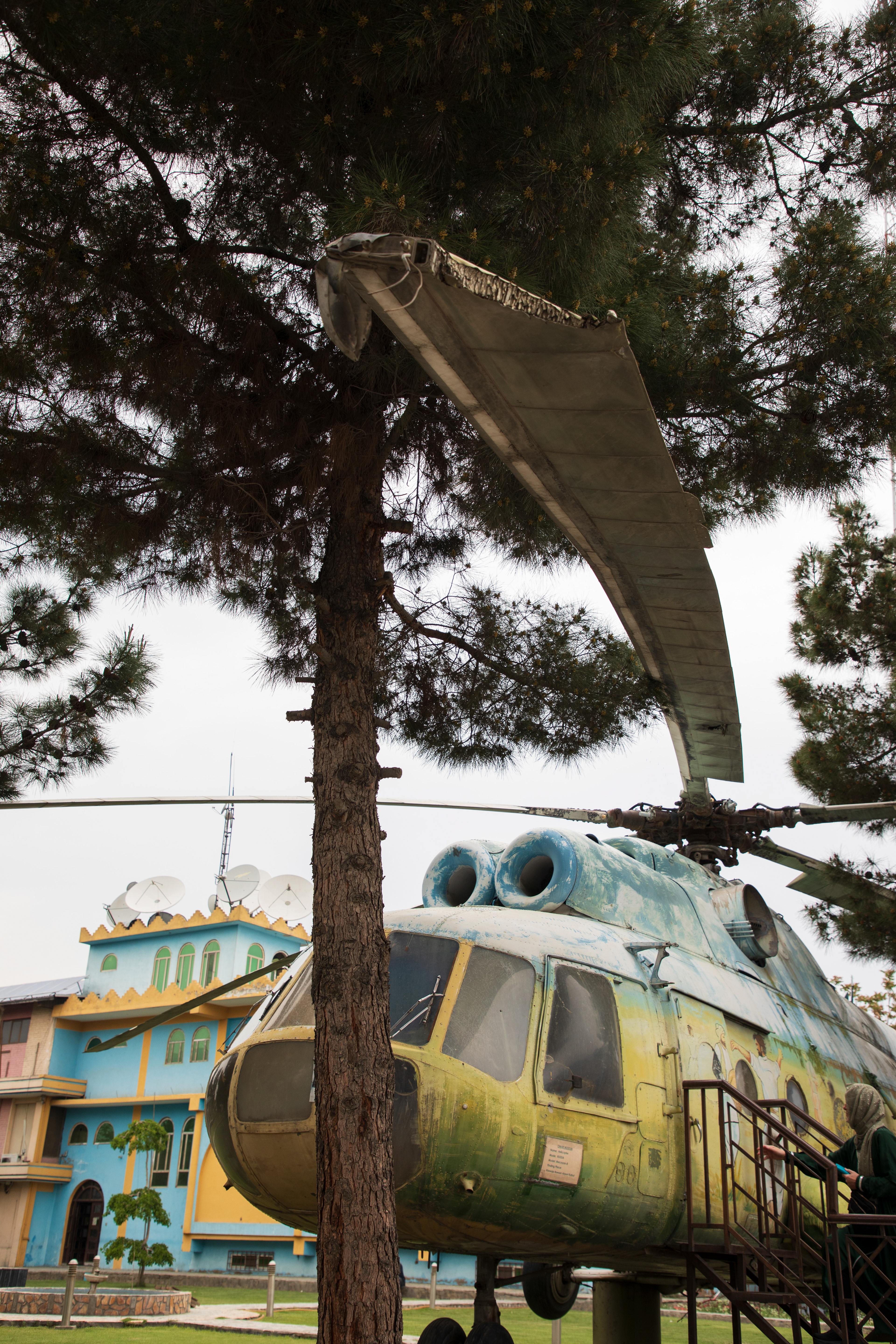


Hotels and cultural sites are often guarded like small fortresses, with armed guards, X-ray scanners, and body searches.
Pictured are the Arms Museum and the Museum of Islamic Art, both in Kabul.
The Museum of Islamic Art was partially emptied by the Taliban, for reasons ranging from censorship to the sale of artifacts to finance their operations.
In particular, many artifacts from the Greco-Bactrian period, found only in Afghanistan and Tajikistan, have likely been lost forever.
Many artifacts end up on the black market.


The photo shows the Taliban government’s efforts to expand Kabul’s urban infrastructure by building new roads. Unfortunately, these efforts have resulted in the demolition of dozens of inhabited buildings, which are now left half-demolished and in decidedly unsafe conditions.
The government has promised support for these people, but many of them will simply end up on the streets.

Took this picture in one of the many orphaneges scattered around Kabul.
Here's the work of a very talented little girl.
One of those on my fridge now.

Afghanistan sometimes feels like everything at the same time, schorcing sun and pouring rain, all at once.
Not a metaphor.


